Nagpur’s first solar park: how a Rs 12 crore bet ended farmers’ night shifts
MSEDCL has commissioned Nagpur district's first 4-MW solar park, giving 1,074 farmers across nine villages eight hours of uninterrupted daytime electricity.
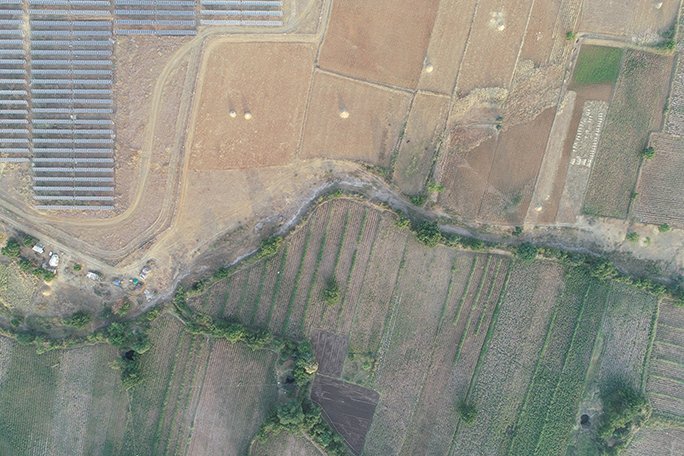
Nagpur district now has its first dedicated solar park, and the numbers behind it explain why private developers are lining up for similar projects. The 4-MW facility, commissioned on July 16 at the 33/11-kV Kachari Sawanga substation in Katol taluka, was built at an estimated cost of Rs 10-12 crore, based on MSEDCL’s own benchmark of Rs 2.5-3 crore per megawatt of installed capacity.
The economics work through a 25-year land lease from the Maharashtra State Electricity Distribution Company Limited to the private developer, paired with a Power Purchase Agreement under which MSEDCL buys the electricity generated for under Rs 3 per unit. That power then flows to farmers under the state’s Chief Minister Solar Agricultural Feeder 2.0 scheme, which is pushing decentralised solar generation near existing substations across the state.
For the 1,074 agricultural consumers connected to the Kachari Sawanga substation, the payoff is tangible: eight hours of continuous daytime power instead of relying on erratic night-time supply for irrigation. The park serves nine villages — Ridhora, Khapri Kutumba, Ghartwada, Gujar Khedi, Sabkund, Kokarda, Kachari Sawanga, Borkhedi and Panchdhar.
MSEDCL officials say the model is designed to scale. Multiple similar solar parks are currently under development elsewhere in Nagpur district, with substation-adjacent siting chosen specifically to cut transmission losses while keeping the power supply dependable for agricultural users.
Chief engineer Rajesh Naik, who oversaw the project alongside superintending engineer Sanjay Wakde and executive engineers Narendra Katare and Narendra Dhawad, said the park marks a step toward reliable daytime electricity for farmers while advancing clean energy and the rural economy.
The project underscores a broader pattern in Maharashtra’s power sector, where private capital is increasingly financing small, grid-adjacent renewable assets that state utilities then contract to buy back at fixed rates — a structure that keeps upfront costs off the government’s books while still meeting policy targets for farm electrification.
Wikimedia Commons/by Kanadaurlauber

Leave a Reply